27 October 20265 min read
The tramuntana wind on the Costa Brava: what nobody mentions at the viewing
The tramuntana is the wind nobody mentions at a viewing. What it does to terraces, roofs, trees and daily life on the Costa Brava, and what to check before you buy.
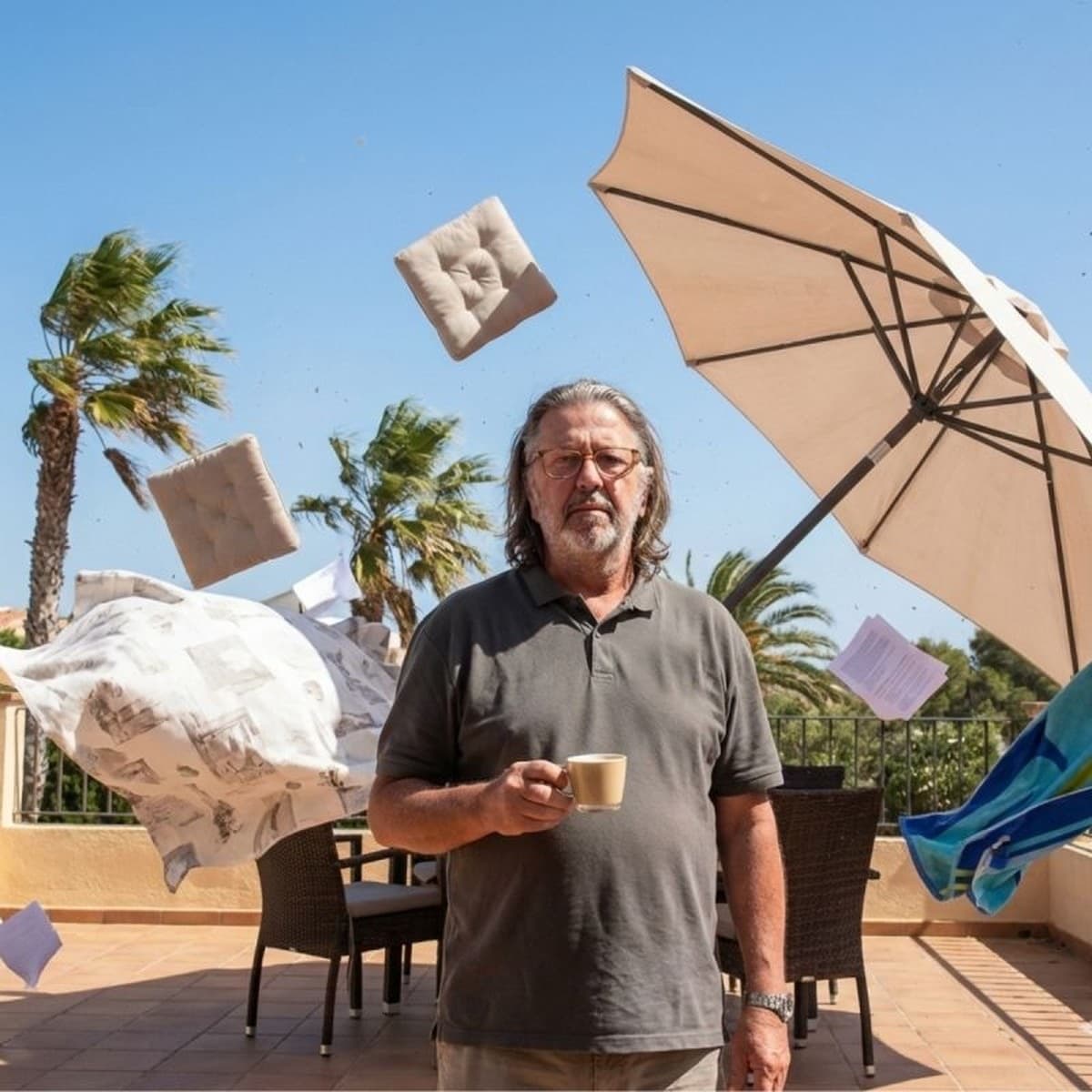
People move to the Costa Brava for the sun. They picture still mornings, warm evenings and calm Mediterranean perfection. Then one day the tramuntana arrives.
Suddenly your terrace cushions are in France. Your parasol becomes a helicopter. And your carefully planned outdoor dinner turns into an extreme sport.
The funny thing is that nobody mentions it during the viewing. They talk about sea views. They talk about sunshine. They do not say: "this area occasionally tries to remove your roof."
What the tramuntana is and why it matters for a house
The tramuntana (spelled tramontana in Spanish, tramontane in French) is a strong, cold, dry wind that blows down from the north. It is felt along the north of Catalonia and the Empordà plain, and the Costa Brava sits right in its path. If you want the geography and the history of the name, there is a short reference entry on the tramontane.
It does not behave like a summer breeze. It can arrive suddenly, blow hard for days, and leave a sky so clear that the mountains in the north look close enough to touch. Locals have a complicated relationship with it. Some say it clears the air. Others say it wears on the nerves. Almost everybody agrees that it explains a lot about how houses here are built, planted and furnished.
What I notice in my work is that buyers treat the wind as weather, a thing you have or do not have on a given Tuesday. It is better understood as a feature of the place, like the slope of the road or the position of the sun. It is part of the property, even though it is not on the title.
How the wind changes terraces, gardens and outdoor furniture
Living here teaches you that comfort is not only about the house. It is about understanding the environment: where to put shade, how to protect outdoor spaces, which materials survive.
Here is what I would look at in the first hour on a terrace:
- Is the terrace open to the north or the north-west, or does something block the wind?
- What is the outdoor furniture made of, and is it heavy enough to stay put? Lightweight plastic and large parasols are the usual casualties.
- Are there windbreaks already, such as a wall, a hedge or a line of cypress trees? Older farmhouses on the plain often have one, and it is rarely an accident.
- Do the shutters close firmly and fasten, or do they rattle on their hooks?
If the answer to the last one is "they rattle", ask yourself how the house will feel at three in the morning with the wind up. It is a question of sleep as much as of repairs.
What to check on a house in a windy area
Wind finds weakness. In a house that is well made it is an inconvenience. In a house that is tired it becomes a list of repairs.
On the roof, look at the tiles. Loose or slipped ones, or ridge tiles that look like they have been re-bedded badly, tell you something about how the roof has coped before. Check awnings, pergolas and anything fixed to the facade, and look at how they were attached. A pergola screwed into render rather than into the structure is a story waiting to happen.
In the garden, look at the trees. Tall pines on the edge of a plot can be lovely, but they are also the first thing to come down or shed branches, and they are expensive to take away. Ask who is responsible for them, and whether anyone has looked at them recently.
Look also at how the original builders dealt with it. In many traditional houses the north side has few openings, and the main rooms and the terrace turn to the south or east. That is not an accident of taste. A new house, or a renovated one, that ignores this logic may look great in the brochure and feel very different in a hard north wind.
Wind, dry weather and fire risk
There is one more point, and it is a serious one. A dry, strong wind makes any fire spread faster. That applies to a barbecue left unattended, to a garden bonfire and to a spark from a chimney, as much as to the forest. Local rules on burning and on access to woodland tighten in dry periods, and they exist for good reasons.
Keep the grass cut and the dead branches cleared around the house, and follow the rules without arguing with them. The Catalan weather service publishes forecasts and warnings at meteo.cat, which is worth bookmarking before you ever need it.
Asking the right questions before you buy
Do what no agent will suggest: visit on a windy day, not only on a still one. Stand on the terrace. Ask the neighbours how often it blows, and for how long. Ask what they use for shade, and what they gave up on. A neighbour will usually give you a more honest answer in two minutes than a brochure will in ten pages.
I help buyers with exactly this kind of question, and the way I go about it is explained on the page about how I work. If you want to know why I do it, you can read a little more about me. And if you want to see the same idea applied to something else, my piece on buying an inherited house in Spain shows why one question can tell you more than the house itself.
Lifestyle is great. Lifestyle with flying furniture is less relaxing. The house that works with this coast, not against it, is the one that was built, planted and furnished with the wind in mind.

More from the Journal
27 November 20266 min read
Unregistered extensions in Spain: the room behind the room, and what to check before you buy
Hidden rooms and unregistered extensions are common in Spanish houses. Learn what the registry, cadastre and licence say, and what to check before you sign.

24 November 20265 min read
Chimney maintenance in a holiday home in Spain: why it should never be a mystery
A smoking fireplace is rarely a mystery. How to keep a chimney clean, store firewood properly and check a flue before you buy a second home in Spain.
20 November 20264 min read
Unfinished buildings in Spain: what the 2008 crisis left on the Costa Brava
Why so many half-built blocks and empty developments still stand on the Costa Brava, what the 2008 crash left behind, and what buyers should check today.